Dry,
musty, stale, dusty, stagnant, smelly, are these
some of the adjectives that might describe the quality
of the air in your evidence room? Is this what you’re
used to breathing everyday caused by poor ventilation,
inadequate air changes, or insufficient filtration?
This can all lead
to damp, moldy and unhealthy conditions. What’s
being stored, contained and what is off gassing
and what evidence may contain hazardous pathogens
that become airborne? When those pollutants are
airborne they become respirable and what you breathe
in has the potential to make you sick.
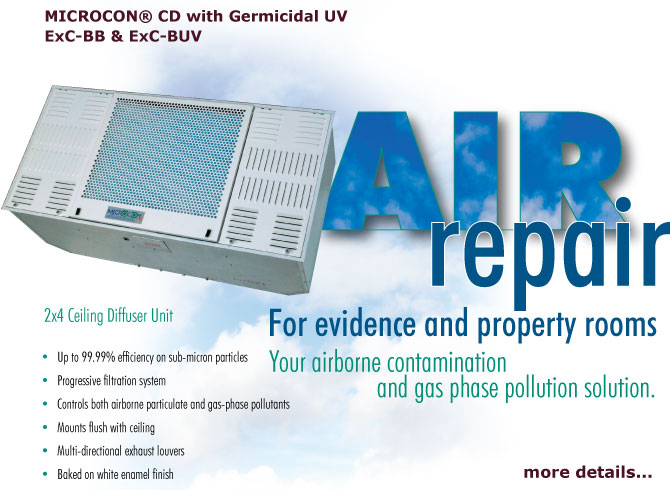
The same equipment we have manufactured
for the hospital and medical areas are now made
available for evidence rooms. Equipment that filters
out particles as small as 0.3 microns, that covers
the bacteria and with the addition of germicidal
UV lamps we can irradiate the airborne viruses.
Air is constantly being filtered
and recirculated and returned to the room so the
system is independent of the heating and cooling
system. Which results in No Loss
of warmer air from heating or cool from your air
conditioning. Saving Energy and compliant to the
recommendations of the International Property and
Evidence Room Association.
Ceiling mounted means its out of
the way and produces a very even and consistent
air pattern that eliminates stagnant air pockets,
static air layers and provides for continuous air
movement with high efficiency filtration.
Carbon cells eliminate gas phase
pollutants and remove odors and fumes from the air.
There’s an air purifier for make for virtually
every contamination need and application. Let us
know your problem so we can provide a solution,
since 1973 we’ve been doing it and we’ll
provide you with plenty of evidence.
In many cases the Defendants' Attorney uses inadequate and improper management of Evidence Room and Property Rooms as evident reasons in establishing impermissible and contaminated Evidence.
The MICROCON®
ExC-BUV or the MICROCON® CD will alleviate your dilemmas
within the Evidence Rooms and Property Rooms.
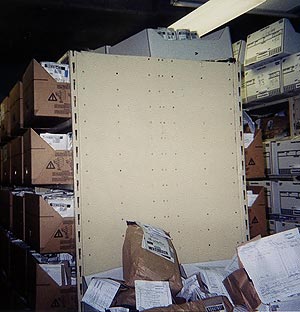
The Evidence Room
and Property Rooms are not to have any windows as a result,
air purification and a Negative Pressure Room is extremely
important, especially in narcotic storage areas. A ventilation
exhaust fan that runs continuously is not the most effective
way of handling this. The biggest dilemma is the Indoor
Air Quality. Allowing outside air pollution and noxious odors into the evidence room and property room.
Narcotics fumes should
not be circulated within a common ventilation system.
The MICROCON® recirculates HEPA Filtered clean air
at very good air changes per hour depending on room size.
Ventilation systems can bring some very serious contaminants. Air pollution is rampant. Carbon monoxide fumes, diesel exhaust. The EPA has over 60% of all cities in the US on diesel exhaust alert. Dust, pollen and air particulate can contaminate and destroy pertinent evidence. Outside ventilation for the evidence room and property room is also exposed to climate dilemmas and air temperature changes. Dampness and moisture will cause metal to rust. It can also affect and contaminate many other pieces of evidence. Photos and electronic digital CDs, VHS Video tapes will become contaminated. Dust is another troublesome particulate in the evidence rooms. This air purification is also protecting the staff of the evidence room from all this air pollution which will make them ill and possible infection of contagious diseases. And the poor air quality and odors are nauseating.
Speaking of biological
evidence, what do you do with items that have fresh blood,
for example, which has to be dried before packaging and
storage? Some type of drying area is required. It must
be able to contain any dripping liquids in a safe manner,
have good ventilation, be able to preserve the integrity
of the evidence, and it must protect employees from accidental
contact.
The best solution is to
have a separate room set aside for this purpose. There
are also commercial dryers available for this purpose,
but they can be expensive. M ICROCON® Air Cleaners
create a clean, safe environment by clearing particulate,
infectious air, and VOCs (volatile organic compounds)
from the air. Dirt, dust, soot, mold spores, bacteria,
dust mites animal dander. MICROCON® eliminates infectious
airborne pathogens, removes hazardous microbial airborne
particulate. Potential hazardous bacteria introduced into
the air by infected persons from whom this evidence was
retrieved. They are invisible to the naked eye and can
remain suspended in the air stream indefinitely. MICROCON®
with HEPA Filtration captures this particulate as small
as .03 microns in size.
If you are utilizing ventilation
systems for other areas be sure these areas are concealed
to the negative pressure room. MICROCON® MCDHUV is
used in highly sensitive environments, such as to avert
migration of airborne particulate from seized drugs that
could become contaminated and unusable evidence. It protects
employees from contaminants such as blood-borne pathogens
from all forms of evidence (clothing, jewelry), lead dust
from weapon storage, and drug off-gassing.
The MICROCON® MCDHUV Air Purification
System meets requirements for law enforcement
organizations, US government agencies. And any of a genus
(Aspergillus) of ascomycetous fungi with branched radiate
sporophores including many common molds.
|